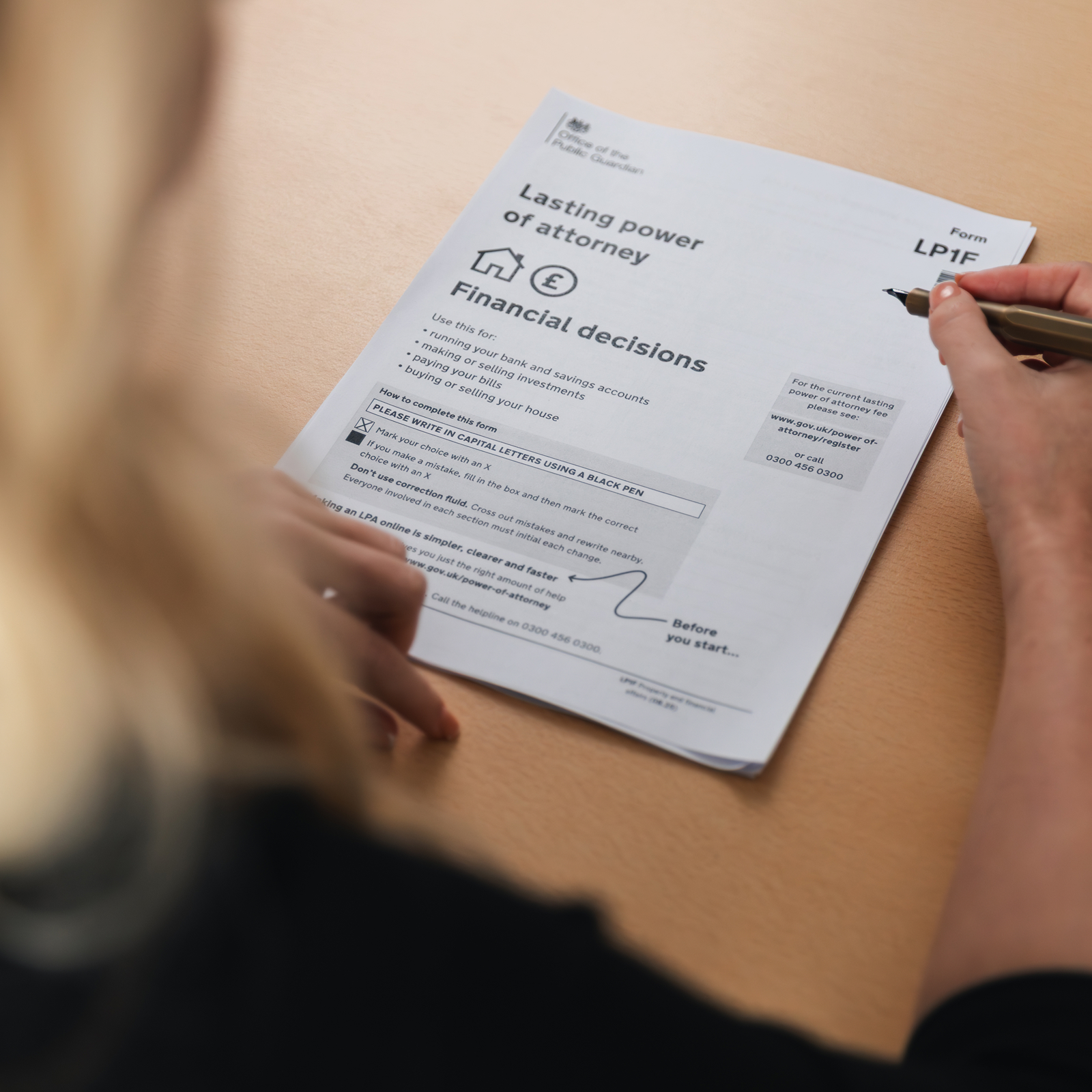
When it comes to planning for the future, we all want peace of mind that our affairs will be in safe hands if we’re no longer able to manage them ourselves. That’s where lasting power of attorney (LPA) and Deputyship come in.
Both give someone legal authority to act on your behalf, but they work in very different ways. In this article, we explain the key differences, what each one involves and why planning ahead can save your family time, stress and money.
What is a lasting power of attorney (LPA)?
A lasting power of attorney is a legal document you set up before you lose mental capacity. It allows you to choose one or more trusted people (called attorneys) to make decisions on your behalf if you ever can’t.
There are two types of LPA:
- Property and financial affairs – covers things like managing your bank accounts, paying bills, or selling your home
- Health and welfare – covers medical treatment, care arrangements and day-to-day decisions like diet or routine
You can choose to set up one or both types. LPAs must be registered with the Office of the Public Guardian (OPG) before they can be used.
What is a deputyship?
Deputyship is a legal process used after someone has already lost mental capacity and did not put an LPA in place.
In this case, a friend, family member or professional, such as a solicitor, can apply to the Court of Protection to become a deputy, so they can legally manage that person’s affairs.
There are also two types of deputyship:
- Property and Financial Affairs Deputyship
- Personal Welfare Deputyship (this is less common and only granted in specific situations)
The court decides who is suitable to act, and they will supervise the deputy’s actions going forward.
What’s the main difference?
The key difference is timing:
| Lasting Power of Attorney (LPA) | Deputyship | |
| Set up when… | You still have mental capacity | You’ve already lost capacity |
| Who chooses the decision-maker? | You choose your attorneys | The Court of Protection chooses a deputy, this could be someone you would not have chosen |
| How long does it take? | Around 8–12 weeks to register | Up to a year, often longer |
| Costs involved | £92 per LPA to register plus solicitors costs | More expensive – application fees, annual supervision fees, and possibly solicitor costs |
| Control | You stay in control of who acts and what they can do | Less control – decisions are made by the court-appointed deputy, again this could be someone you do not know, like a professional solicitor |
Why acting early makes a big difference
Putting an LPA in place while you’re still able to is a simple but powerful step. It gives you choice, avoids delays and helps your family if the worst happens.
With deputyship, loved ones may face:
- A lengthy court process
- Extra paperwork and reporting
- Higher costs and stress at an already difficult time
Planning ahead with an LPA is a proactive, thoughtful way to protect your future and to support the people you trust to support you.
Do you need a solicitor?
It’s possible to apply for an LPA or deputyship yourself, but many people find the forms and decisions involved can be confusing.
At Belcher Addison, we offer clear, straightforward advice without the jargon. We’ll help you:
- Choose the right option for your circumstances
- Complete all paperwork correctly
- Avoid common mistakes that can lead to rejection or delays
Whether you’re looking to plan ahead or you’re already navigating the deputyship process for a loved one, we’re here to help.
Let’s talk about your next step
Need help setting up an LPA? Or unsure what to do if someone has already lost capacity?
Get in touch with our expert team and we’ll explain your options clearly and help you move forward with confidence.